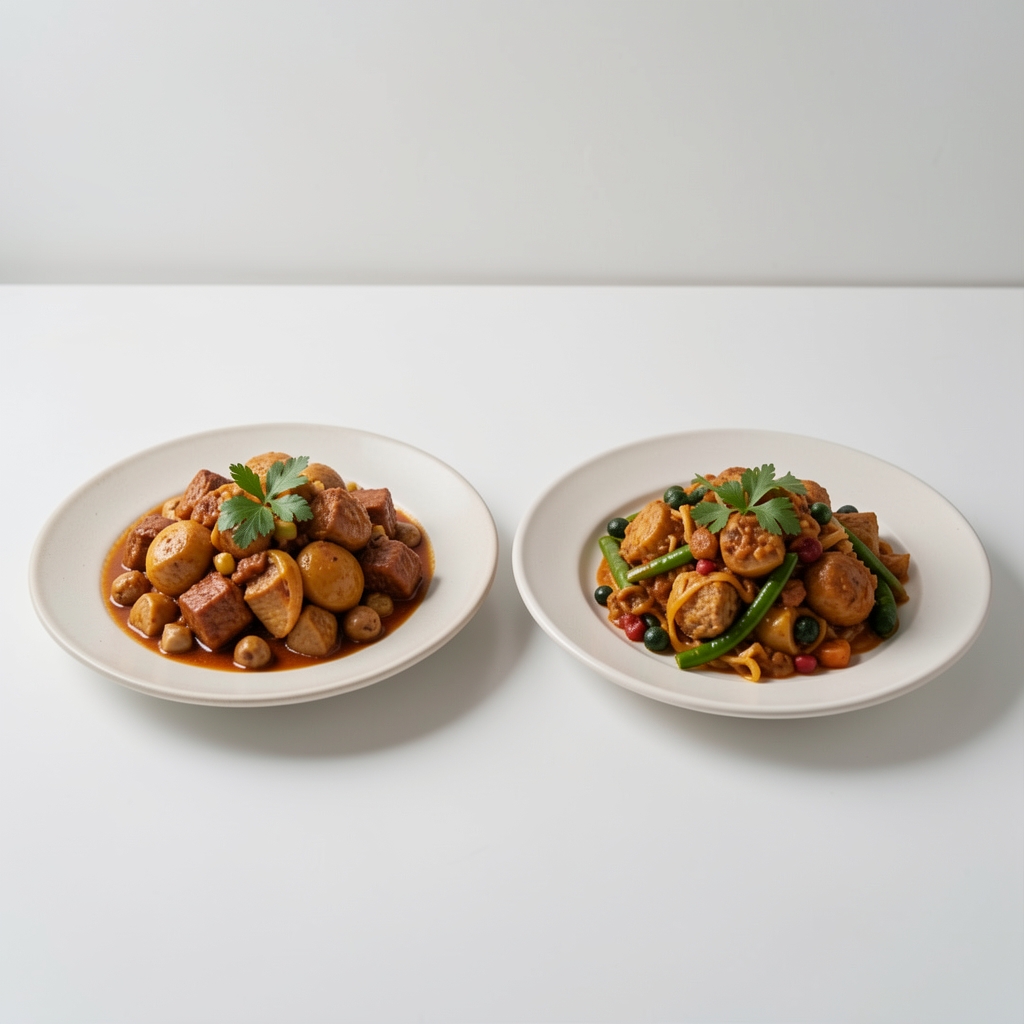
The relationship between eating pace and portion awareness is one of the more consistently documented patterns in food consumption research. It is also one of the least discussed in everyday accounts of eating habits. The reason, perhaps, is that it resists the framing of individual choice: the mechanism is not one of willpower or discipline, but of timing. The body's food rhythm, when given adequate time, produces information about satiety that the eating pace either allows or forecloses.
What Happens When a Meal Takes Longer
Food-pace and appetite research documents a physiological sequence that begins when food consumption starts and concludes, roughly, at the twenty-minute mark. Within this window, the digestive process generates appetite information that, when attended to, functions as a natural moderator of how much is consumed before a sense of adequate fullness is reached.
The key variable is not what is eaten but whether the meal is still in progress when this information becomes available. A meal completed in nine minutes runs its full course before the appetite signal has had adequate time to register. A meal extending beyond twenty minutes — even the same meal, from the same plate — allows the eater to encounter that signal while food remains available.
This is the central observation behind the slow eating benefits documented in published food-pace research. The benefit is not inherent to slow eating as a technique or practice. It is a consequence of the time relationship between the meal duration and the appetite signalling cycle. Slow eating provides the window. The window provides the information.
Portion Size as a Consequence, Not a Cause
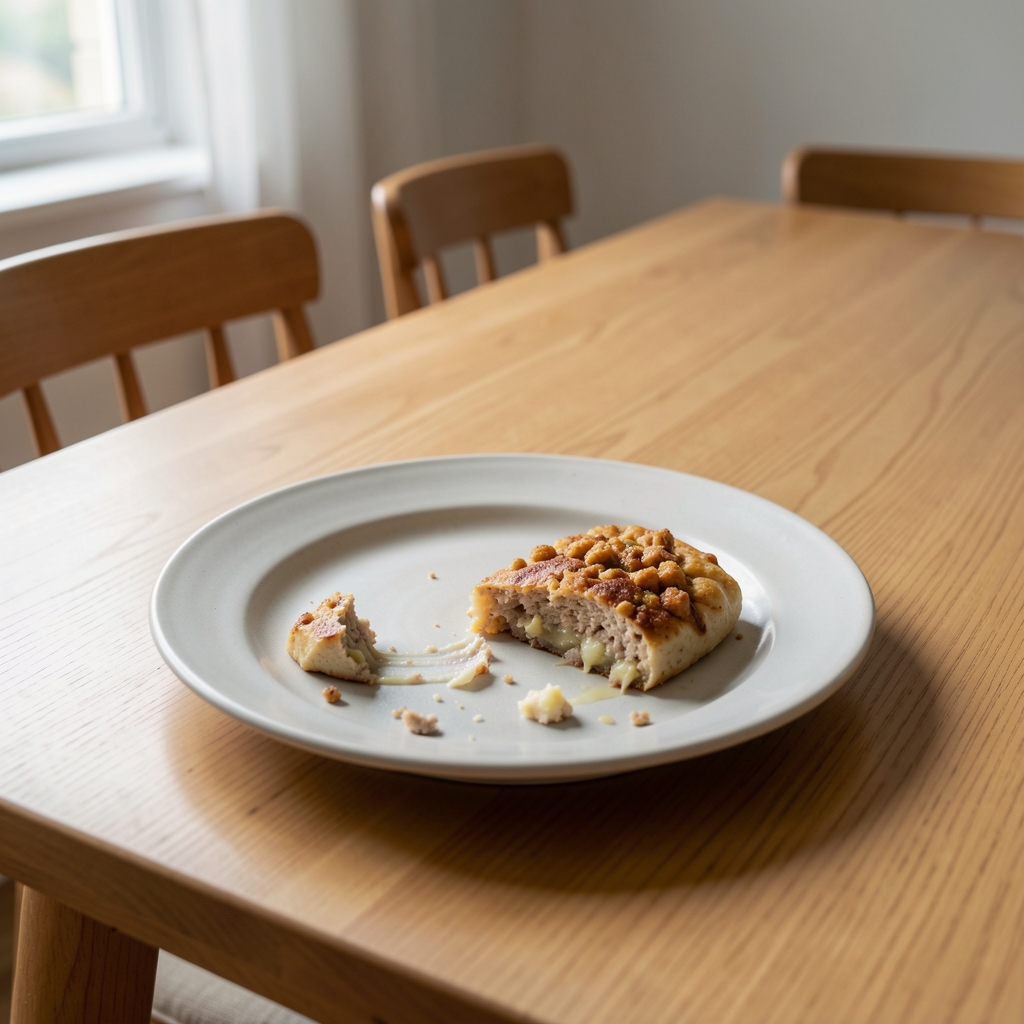
Much of the public discourse on overeating patterns frames portion size as the causal variable — the thing to be reduced, managed, or pre-determined. Portion-controlled containers, smaller plates, halved servings: these interventions share the assumption that the portion is where change needs to happen.
The food-pace literature offers a different framing. In this account, portion consumed is as much a consequence of eating pace as it is of portion offered. The same individual, presented with the same amount of food, may consume significantly different quantities depending on the speed and attentional quality of the eating period. Portion awareness — the dynamic process of noticing how much has been consumed and adjusting accordingly — is pace-dependent in a way that portion size is not.
This does not mean that portion offered is irrelevant. It means that the offered portion and the consumed portion are mediated by the eating pace in between. Understanding that mediation is the editorial contribution Boralen Journal aims to make.
"Portion awareness is pace-dependent in a way that portion size is not."
— Tobias Marsden, Boralen Journal
Convenience Food and Satiety
The convenience food and satiety relationship is frequently discussed in terms of nutritional composition: ready-made and packaged foods are characterised, in this framing, by high caloric density and low satiety-per-calorie values relative to whole foods. This is a documented pattern in food composition research.
What is less frequently noted is that the consumption context of convenience food — rushed, desk-based, screen-concurrent — compounds whatever satiety limitations the food composition may carry. A meal with moderate satiety-per-calorie properties, eaten slowly in a low-stimulation environment, produces a different eating experience than the same meal eaten in nine minutes at a laptop screen. The eating pace introduces a second satiety variable on top of the compositional one.
This observation does not mean that convenience food is uniquely responsible for overeating patterns. It means that the conditions under which convenience food is typically consumed — hurried, distracted, time-pressured — are the conditions least conducive to portion awareness, independent of what the food itself is. The problem, if it is one, is architectural: it belongs to the structure of the eating context as much as to the food in the container.
The Rhythm of the Eating Day
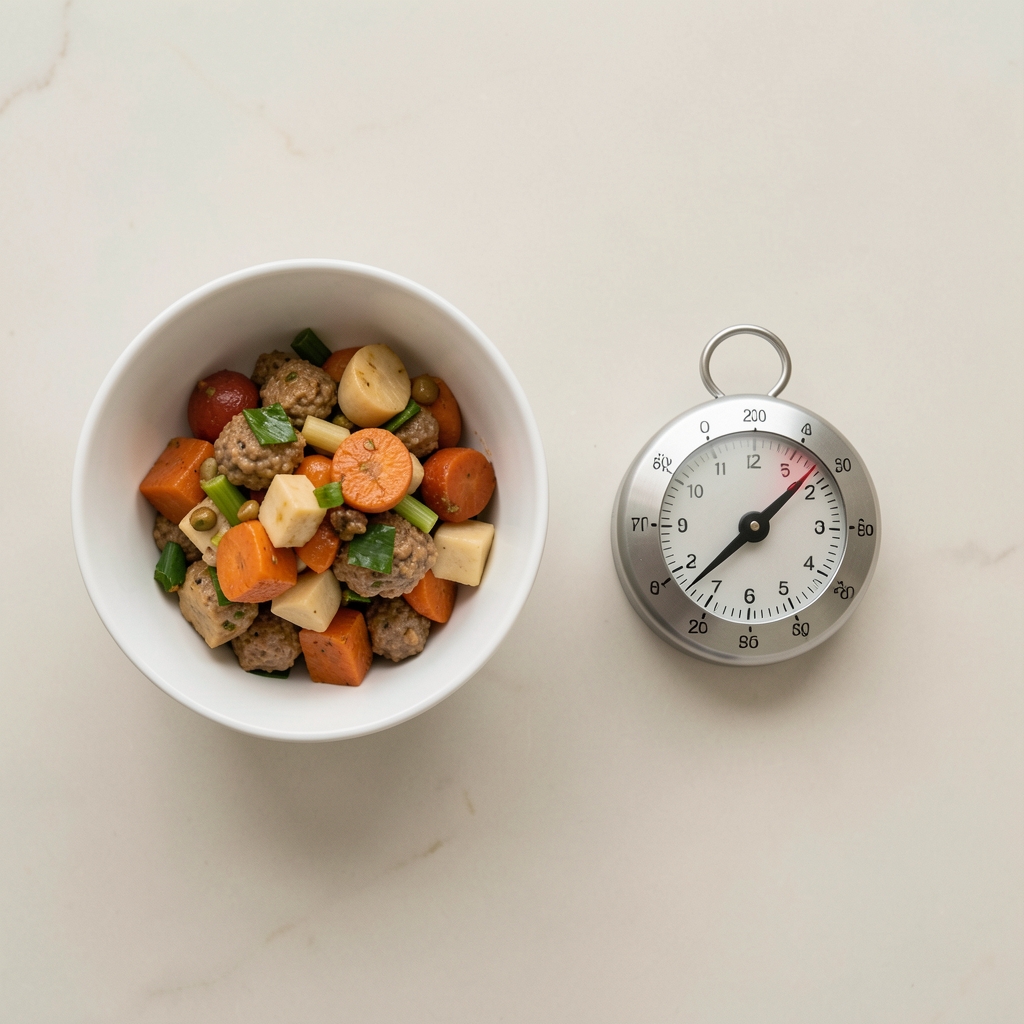
Food-pace research documents not only the effects of individual meal pace but also the cumulative rhythm of eating across the day. The eating rhythm — the sequence of meal start times, durations, and inter-meal intervals — constitutes a pattern that has its own effects on appetite and portion awareness over the course of a full day.
A rushed morning meal followed by a nine-minute desk lunch produces a particular kind of eating day: one in which appetite information has been largely unavailable for the first two mealtimes. By the time the evening meal arrives — typically the longest and most attentive of the three — the appetite is not reading off a clean baseline. It is reading off an accumulation of hours during which the satiety signal was never fully processed.
This is not a case for alarm about the eating rhythm of modern life. It is an observation about the interconnection between the individual meal and the structure of the eating day. The Boralen editorial team's interest is in making that interconnection legible — in documenting what the day's eating looks like as a sequence, not just as individual events.
The eating rhythm and portions relationship is, in this sense, a narrative one. Each meal is a chapter in a longer story. The pace of one chapter conditions the reader's appetite for the next.
The Meal Environment as Pace Architecture
What the food-pace research ultimately suggests — and what the Boralen observation work over the past three months has documented at the level of individual field notes — is that portion awareness is an outcome of meal environment as much as of individual intention.
Slowing down at mealtimes, as a practice, is less about technique and more about the structural removal of the conditions that produce fast eating. Those conditions — the desk, the screen, the deadline in the immediately following period — are the pace architecture of the modern eating day. They are not personal failures. They are features of the environment, and they are documented as such in the Boralen field notes.
The editorial contribution here is to name the architecture. To say: these are the conditions. This is what they produce. The portion consumed when eating is rushed is not a measure of appetite. It is a measure of time.
Tobias Marsden will continue this investigation in a forthcoming piece on takeaway habits and the particular rhythm of the end-of-week evening meal — a period when the week's accumulated eating pace comes most clearly into focus.
- — The appetite signal cycle documented in food-pace research takes approximately twenty minutes to complete — a window that most desk lunches (averaging nine minutes) do not accommodate.
- — Portion consumed is mediated by eating pace: the same offered portion produces a different consumed portion depending on the speed and attentional quality of the meal period.
- — Convenience food and satiety research suggests compositional effects that are compounded by the eating context — rushed, screen-concurrent — in which convenience food is most often consumed.
- — The eating rhythm across the day — the sequence of meal pace and inter-meal intervals — conditions appetite at each subsequent mealtime in ways that individual meal observation does not capture.
Articles published on Boralen Journal are editorial in nature and reflect the writers' observations on eating pace, convenience food habits, and everyday meal behaviour. The content is not intended as professional advice, nor as guidance for the management of any specific condition. Readers with specific concerns about their eating habits are encouraged to speak with a qualified wellness professional.