The working lunch, as it was once understood in British office life — a proper pause from the desk, a meal taken in a separate room or nearby cafe — has compressed, in many workplaces, to something closer to a refuelling stop. Nine minutes is the figure that appears repeatedly in food-pace research on UK office workers. Not enough time for the appetite signals that govern portion awareness to complete a full cycle. Not enough time, in many cases, to taste what has been eaten.
The Architecture of a Nine-Minute Meal
A nine-minute lunch is not an accident. It is the residue of structural pressures that have accumulated in British working culture over the past three decades: open-plan offices, continuous notification streams, the sense that visible presence at the desk signals productive engagement. Food has been absorbed into this structure not as a counterpoint to work, but as a secondary task layered on top of it.
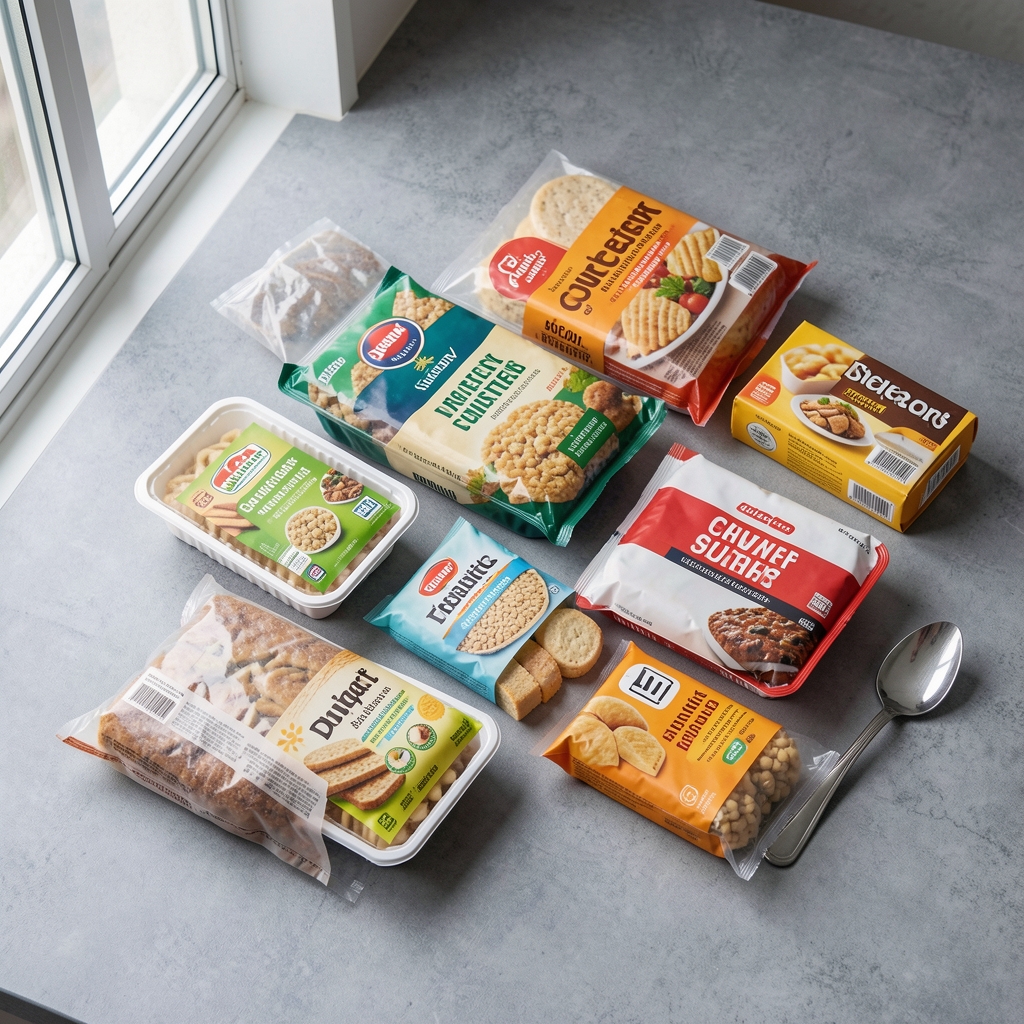
The consequences for food choice are predictable but worth documenting precisely. When the window for eating is nine minutes, the selection criteria for a meal narrows significantly. Preparation time is removed from the equation. Distance from the desk is a variable to minimise. The food that survives these constraints is food that can be purchased and consumed in the same location: the sandwich from the supermarket self-checkout queue, the pot of noodles dissolved with hot water from the kitchen tap, the protein bar from the desk drawer.
None of these are categorically problematic choices. The editorial observation here is not that convenience food is inherently inferior, but that the constraints of rushed eating habits tend to foreclose options that require more time — including options that the same individual might, on a less pressured afternoon, find more satisfying.
Eating Pace and the Appetite Signal
Food pace research has consistently observed that the body's satiety signalling — the process by which appetite information travels from the digestive system to the areas of the brain that register fullness — operates on a roughly twenty-minute cycle after eating begins. The implication of this for hurried meals is significant, though the mechanism is not one that the editorial team at Boralen Journal presents as a directive: it is, rather, a documented pattern worth understanding.
What published food-pace research documents is that individuals who complete a meal in under twelve minutes are more likely to continue eating beyond the portions they would have consumed had the same food been eaten over a longer period. The eating pace functions as a kind of attention filter: a fast pace is correlated with reduced awareness of how much has been consumed.
This connection between eating pace and portion awareness is not a reason for alarm — it is a reason for observation. The question that food-pace journalism can contribute to is not "how do we fix rushed eating habits" but "what does the rushed eating habit tell us about the structure of the day it sits inside?" The meal is the record. The pace is the index.
"The meal is the record. The pace is the index."
— Eleanor Whitfield, Boralen Journal
The Desk Lunch as Field Site
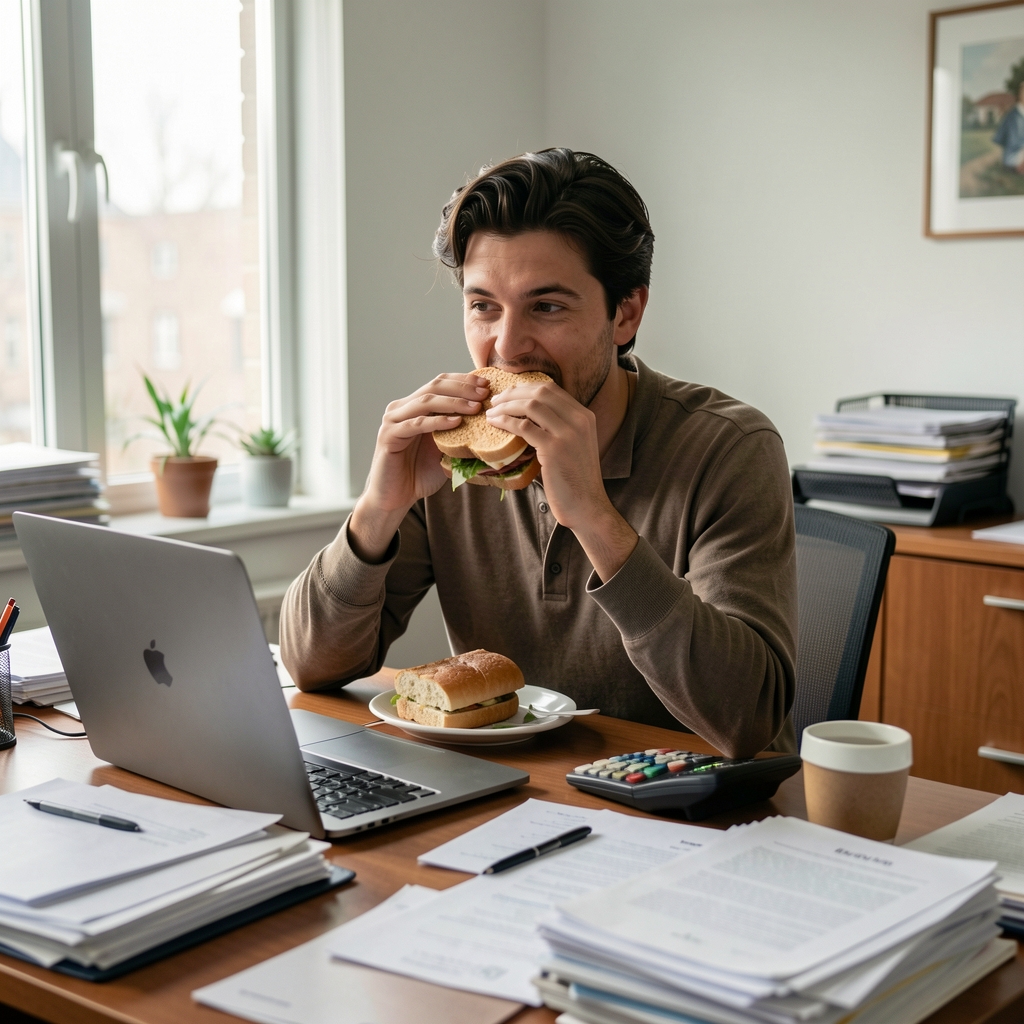
To spend a week observing the desk lunch in a mid-sized London office is to watch a particular category of human behaviour unfold with striking consistency. At approximately 12:45pm, the space that was previously occupied by keyboards and notebooks becomes, briefly, a meal surface. Wrappers are opened with one hand. The other hand remains on the mouse. The email client stays visible. Conversations continue — over headsets or across desks — with occasional forkfuls absorbed into the rhythm of the discussion.
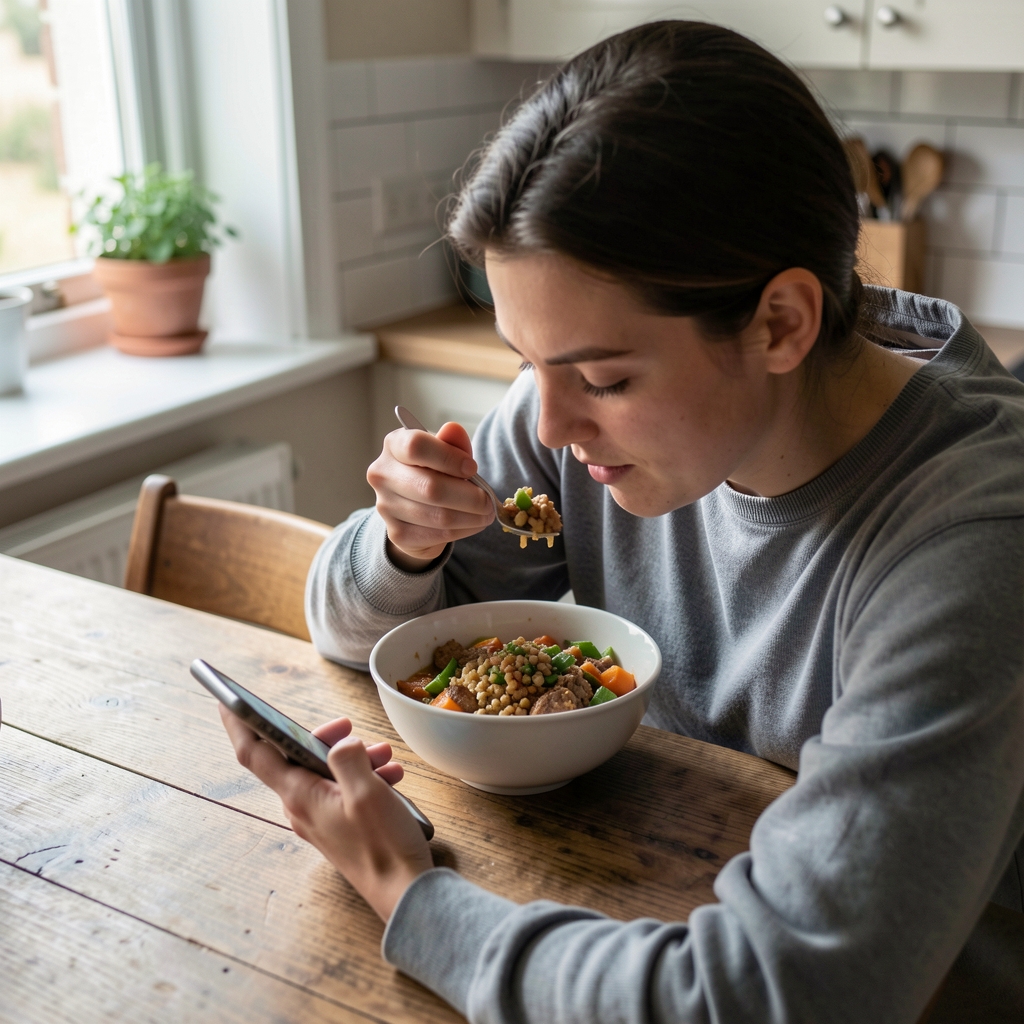
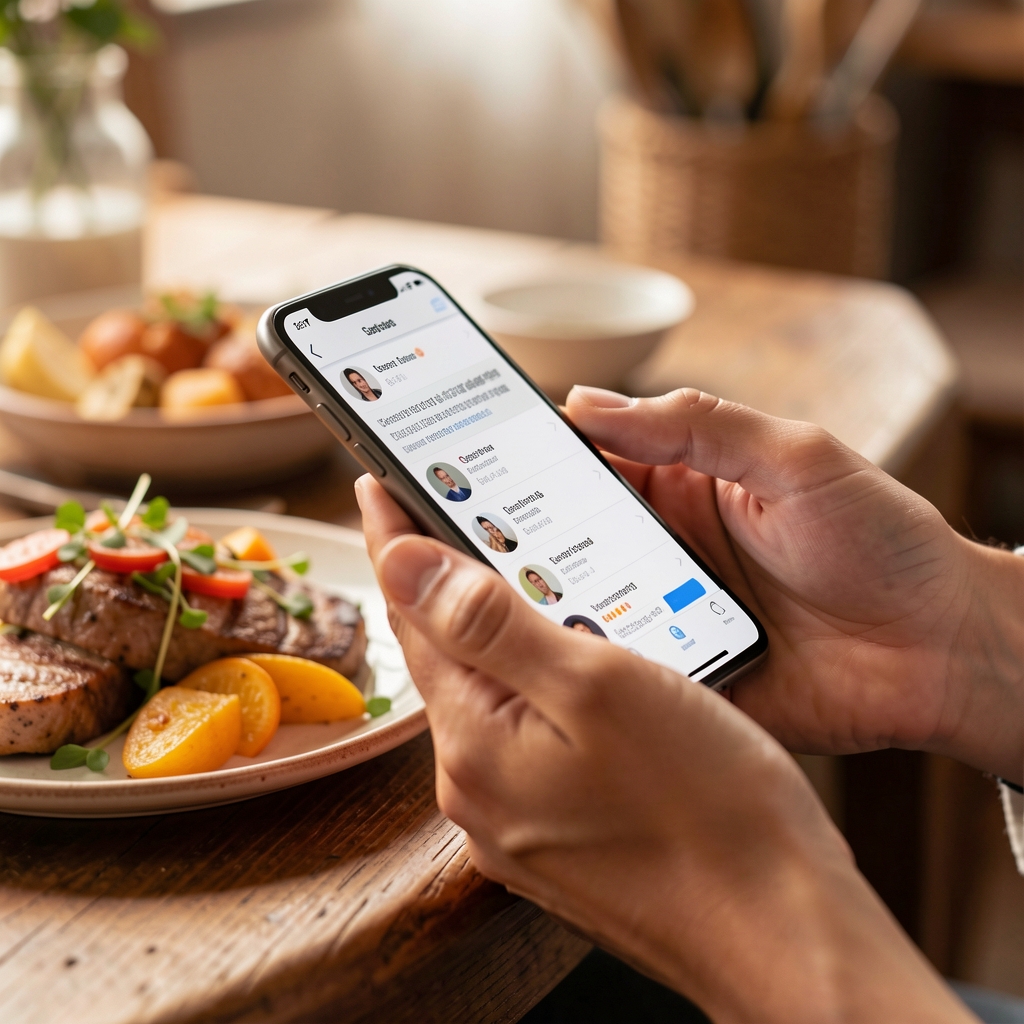
The distracted eating pattern that results is not incidental. Eating and screens research — which documents the relationship between visual attention and food consumption awareness — consistently observes that individuals who eat while engaging with screens consume more before registering satiety than those eating in the same space without screen engagement. The screen does not prevent the body from signalling appetite information. It competes with the attention required to notice those signals.
This does not make the desk lunch a uniquely modern pattern. People have always eaten in the context of other activities. What is distinctive about the contemporary working lunch is the density and persistence of the competing attentional demands — and the degree to which this eating pattern has become the default rather than the exception.
Convenience Food and the Time Pressure Variable
Convenience food choices tend to attract editorial commentary that frames the choice itself as the variable of interest — the thing to be addressed. What is perhaps more generative is to examine the time-pressure variable that makes convenience food the rational selection in the first place.
A worker with forty-five minutes allocated for lunch, able to leave the building, and without the social pressure to return visibly promptly, makes different food choices than the same worker with nine minutes, desk-bound, and aware that the next meeting starts at 1pm. The food choices diverge not primarily because of nutritional knowledge or preference but because of time architecture.
Boralen Journal's editorial approach to convenience food is therefore structural rather than prescriptive. We document what convenience food patterns look like, and what eating-pace environments produce them. The observation is the contribution. The reader brings the interpretation.
The Slow Meal as Counterpoint
The slow eating benefits documented in food-pace research are, by nature, the inverse of the rushed eating patterns outlined above. A meal consumed over twenty to thirty minutes — with intermittent pauses, in an environment low in competing stimuli — allows the appetite signalling process more of the time it requires to communicate useful information about satiety.
What is interesting to note is that slow eating, as a pattern, is less a practice requiring special conditions than an absence of the conditions that produce fast eating. The meal environment — the table, the absence of a screen, the absence of a scheduled obligation in the following fifteen minutes — is the primary variable. The food itself is secondary.
This suggests that the questions worth asking about eating pace in modern UK workplaces are less dietary and more architectural: not what people eat, but where and for how long. Boralen Journal intends to continue documenting both.
- — The average UK office working lunch has been observed at approximately nine minutes — well within the window where food-pace and appetite-signal research identifies changes in portion awareness.
- — Convenience food choices under time pressure reflect structural constraints of the working day rather than isolated preference decisions.
- — Screen-concurrent eating patterns — eating and screens research — are associated with reduced attention to appetite signals during the meal period.
- — Slow eating benefits are more closely tied to meal environment variables (time, space, competing demands) than to food type or preparation method.
Content published by Boralen Journal is selected based on published nutritional research and reviewed for editorial accuracy by a second editor before publication. Articles reflect the writers' observations on eating pace, convenience food habits, and everyday meal behaviour. The content is not intended as professional guidance for the management of any specific condition. Readers with specific concerns about their eating habits are encouraged to speak with a qualified wellness professional.